


What is a Two-Toed Sloth?
Two-toed sloths are slow-moving mammals of the rainforest, known for their sedentary lifestyles, long, branch-like limbs, and curved claws that help them hang from trees.
The two-toed sloth (Choloepus) is a tree-dwelling mammal that’s made for the lazy life. Two-toed sloths spend about 15 hours a day sleeping, waking up at night to traverse the treetops for food. These adorable tree-huggers are perhaps best known for their slow-moving pace; in fact, they move so slowly that actual algae starts to grow on their fur, giving them the perfect camouflage amongst the foliage.
You may have also heard of the three-toed sloth, and while both are adorable, there are a few important differences! Two-toed sloths are larger, nocturnal, and have a pig-like snout, while three-toed sloths are smaller, daytime movers with a sweet smile and an almost 360° head turn.
Where Do Sloths Live?
Two-toed sloths are true tree-dwellers, living high up in the tropical rainforests of Central and South America—including places like:
- Brazil
- Colombia
- Venezuela
- Peru
- Ecuador
- Bolivia
- Guyana
- Suriname
- French Guiana
- Panama
- Costa Rica
- Honduras
- Nicaragua
Basically, if there’s a warm, humid jungle packed with tall trees and tasty leaves, chances are a two-toed sloth is napping there.
Two-toed sloths spend almost their entire lives hanging upside down, moving slowly through the canopy using those powerful, curved claws. These sloths are all about the tree life—sleeping, eating, and even giving birth up in the branches. You’ll rarely catch one on the ground unless it’s bathroom day (yep, they only come down about once a week!).
Everything about their behavior is built for this leafy, low-energy lifestyle. Their slow-motion movement, camouflage-colored fur, and love of quiet, shady spots all help them stay hidden from predators—and stay comfy while doing it.
What Do Sloths Eat?
Main Foods: leaves, fruits, flowers, buds, bark, insects
Two-toed sloths have one of the most unique diets in the animal kingdom—and it's a big part of why they move so slowly (and sleep so much!). As primarily folivorous (leaf-eating) herbivores, their diet is rich in, well, leaves, flowers, and fruits found high in the rainforest canopy. But don’t let their chill vibes fool you—these sleepy eaters have some fascinating food facts up their fur.
Typical Two-Toed Sloth Diet Includes:
- Leaves – Their main staple. They prefer tender, young leaves packed with fiber.
- Fruits – Think apples, mangoes, bananas, and other soft fruits when in care.
- Flowers – A sweet treat and occasional snack in the wild.
- Buds, Twigs & Bark – Supplements when foliage is scarce.
- Occasional Protein – Though rare, they may eat insects or bird eggs.
- Algae – Sloths sometimes lick algae from their own fur for trace nutrients.
In care, like at Wild Florida, their diet may also include high-fiber, low-starch items like green beans, carrots, and leaf-eater biscuits to support digestion and mimic their natural feeding style.
Everything about the two-toed sloth’s diet and digestion is built for efficiency, letting them get the most out of every bite without burning excess energy.
What is an African-Crested Porcupine?
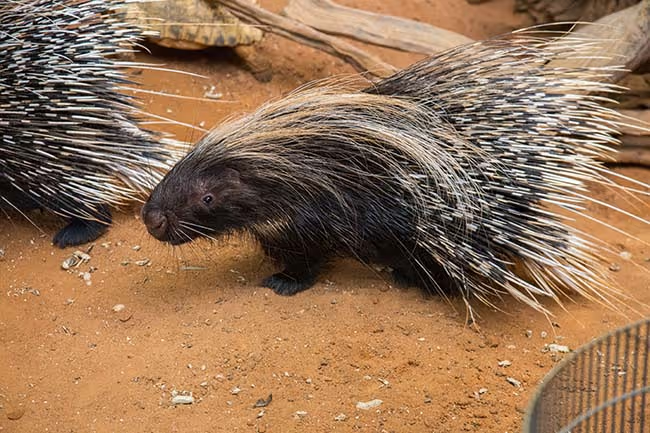
African-crested porcupines are large, ground-dwelling rodents known for their dramatic quills and nighttime foraging habits.
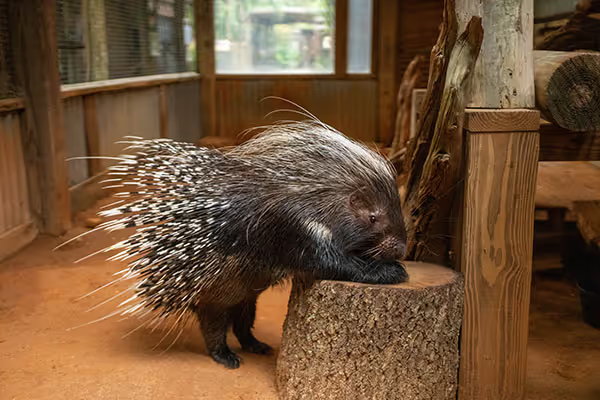
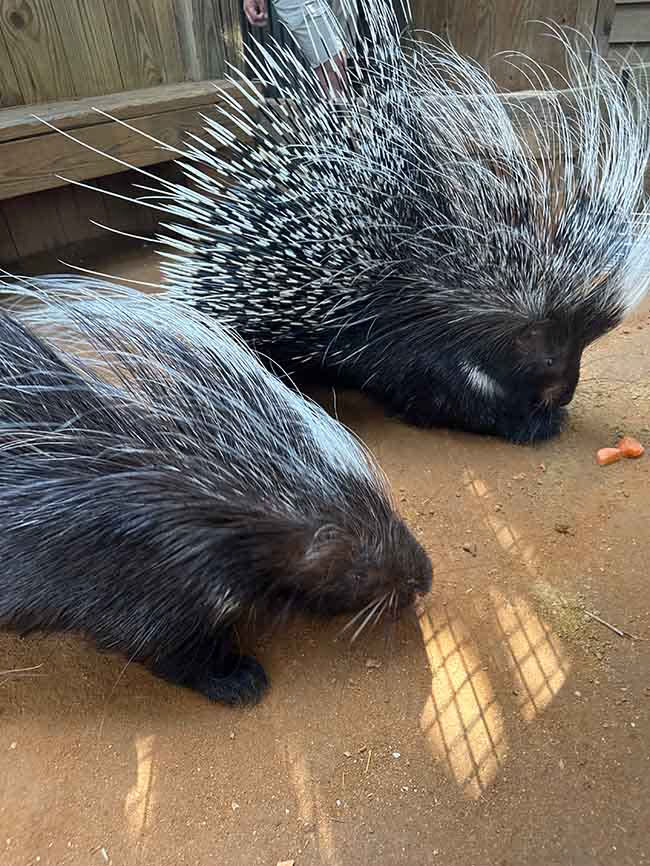
The African-crested porcupine (Hystrix cristata) is the largest porcupine species in the world and it knows how to make an entrance. Covered in long, hollow quills that normally lay flat, this prickly powerhouse flares them up when startled, instantly doubling in size (or so it seems). While they can’t shoot their quills, they can rattle them like a natural maraca.
These big-bodied rodents are nocturnal and love a good nighttime snack, think roots, bark, fruit, and the occasional crunchy insect. During the day? You’ll usually catch them snoozing in a cozy burrow with their porcupine crew.
Where Do Porcupines Live?
From savannahs to Sicilian hillsides, African-crested porcupines have made themselves at home across continents.
You’ll find African-crested porcupines (Hystrix cristata) roaming across parts of Africa and even Europe! Look for them in:
- Italy
- Sicily
- Morocco
- Algeria
- Libya
- Tunisia
- Ghana
- Nigeria
- Benin
- Ethiopia
- Sudan
- Egypt
- & more!
These adaptable rodents call a wide range of habitats home from rocky mountainsides to dry woodlands, savannahs, and deserts. They’re true diggers at heart, carving out cozy burrows for their families. But if a warthog or aardvark leaves a tunnel behind, they’re not above moving in rent-free. Quills and real estate smarts? Iconic.
What Do Porcupines Eat?
Main foods: roots, bark, fruit, and bulbs, plus the occasional insect or bone.
These prickly snackers are (mostly) herbivores with a serious love for roots and roughage, but their menu might surprise you. Here's a peek at their foraging faves:
- Roots and tubers
- Tree bark and branches
- Fruits and bulbs
- Bones and antlers (for calcium and dental health)
- Occasionally: insects, small vertebrates, and carrion
At night, they venture out to sniff and dig up whatever tasty treat they can find, sometimes traveling long distances to do it. Their ever-growing teeth need constant grinding, so even bones and tough bark get the chomp treatment. While plants make up most of their meals, a little extra protein here and there helps keep them fueled and fierce in the wild.
What is a Reticulated Giraffe?
The reticulated giraffe (Giraffa reticulata) is one of the most iconic and easily recognized giraffe species. It’s known for its striking coat pattern made up of large, reddish-brown patches outlined by bright white lines. This design gives the giraffe a net-like appearance, which is exactly what the word “reticulated” means!
As one of the four main types of giraffes, the reticulated giraffe is also the tallest land mammal, with males growing up to 18 feet tall. Despite their size, giraffes are one of the most gentle and graceful animals in the animal kingdom.
Where do Giraffes Live?
Reticulated giraffes are native to the dry savannas and open woodlands of northeastern Africa, mainly in northern Kenya, with smaller populations in southern Ethiopia and Somalia. These habitats offer the scattered trees and shrubs that giraffes rely on for food and shade.
Unlike animals that migrate, giraffes usually stay within a home range and follow food and water sources throughout the year. They’ve adapted well to semi-arid climates, where heat is high and greenery can be limited.
Many reticulated giraffes now live in protected areas like Kenya’s Samburu National Reserve, where conservation efforts help protect their future.
What do Giraffes Eat?
Reticulated giraffes are herbivores that spend much of their day foraging in the treetops. They typically spend 12 to 16 hours a day browsing for food. Instead of chewing each bite, giraffes use their thick saliva to help swallow leaves whole.
Here’s what’s on a giraffe’s menu:
- Leaves (especially from acacia trees)
- Buds and flowers
- Fruits and seedpods
- Young shoots and twigs
With a tongue that can stretch up to 20 inches, giraffes can wrap around thorny branches for food easily. They get most of their water from plants, drinking only every few days.
Their favorite meals come from tall, thorny trees that other animals can’t reach. This adaptive feeding style helps them avoid competition with other grazing African animals.
What is an American Alligator?
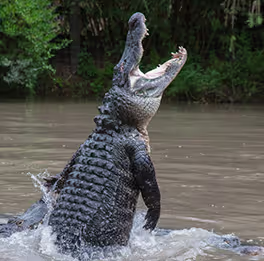
The American alligator (Alligator mississippiensis) is a reptile species that dates back approximately 150 million years! There are only two kinds of alligators in the world: the American alligator and the much smaller Chinese alligator. Of the two, the American is the heavyweight.
Our guests often ask what the difference between an alligator and a crocodile is, but there are easy ways to tell them apart:
.avif)
American alligators are built for stealth. Their strong tails help them glide through the water, and their backs are covered in bony armor plates called scutes. Inside those powerful jaws, they carry around 80 teeth at a time and can go through more than 3,000 in a lifetime!
Where do American Alligators Live?
American alligators live in freshwater habitats like swamps, marshes, rivers and lakes. They prefer slow-moving or still water with plenty of vegetation to hide in.
Most alligators are found in Florida and Louisiana, with Florida home to an estimated 1.3 million alligators across all 67 counties. You can also spot them in parts of Georgia, Alabama, Mississippi, Texas and as far north as coastal North Carolina.
Unlike crocodiles, alligators can’t tolerate saltwater for long. Since they lack salt glands, they stick to freshwater for survival.
What do American Alligators Eat?
American alligators are carnivores and ambush predators. Instead of chasing prey, they stay almost completely still in the water, waiting for the perfect moment to strike. Smaller animals are swallowed whole, while larger ones are shaken apart or spun in a powerful death roll to break them down.
Here is some of what these giant reptiles feast on:
- Fish and frogs
- Snails and turtles
- Birds
- Sammals like raccoons and deer
- Carrion (already dead animals)
American alligators also have one of the strongest bite forces in the animal world. For comparison, the average human bite is about 170 pounds per square inch (PSI), while a lion’s bite reaches around 1,000 PSI. An alligator’s bite force can soar to 3,000 PSI.
That’s strong enough to snap a turtle shell!
What is a Ring-tailed Lemur?
The ring-tailed lemur (Lemur catta) is one of Madagascar’s most iconic animals, and for good reason. With black and white striped tails featuring exactly 13 rings, they’re easy to spot and hard to forget! Their tails don’t help them grip, but they do help with balance and act like fluffy flags to keep the group connected as they move.
These wide-eyed primates have soft gray fur, white bellies and bold black markings that frame their faces. And those golden-orange eyes? They’re not just beautiful. A special layer in their eyes helps them see in low light, especially at dawn and dusk.
Where Do Ring-tailed Lemurs Live?
Ring-tailed lemurs are found only in Madagascar, an island off the coast of Africa. Scientists believe their ancient ancestors made the journey by floating across the sea on mats of vegetation. Since then, they’ve adapted to a wide range of habitats across the island.
You’ll mostly find them in southern Madagascar, in dry forests, rocky canyons and the island’s famous spiny bush plants. While they’re excellent climbers, ring-tailed lemurs spend much of their time on the ground foraging and sunbathing. At night, they head for the trees to rest and stay safe from predators.
What Do Ring-tailed Lemurs Eat?
Ring-tailed lemurs typically feed on vegetation, but their diet is surprisingly diverse. These opportunistic omnivores enjoy:
- Fruits and berries
- Leaves and flowers
- Bark, sap and tree gum
- Cactus pads and drought-resistant plants
- Insects, bird eggs and small lizards
The ring-tailed lemur’s ability to adjust to seasonal foods, moving from fruits to insects when necessary, makes them one of the most adaptable and widespread lemur species on the island.
In the wild, this varied diet not only fuels the lemurs but also helps spread seeds across Madagascar’s forests, making them vital for the ecosystem.
What is an Asian Small-Clawed Otter?
The Asian small-clawed otter (Aonyx cinereus) is the smallest species of otter in the world, known for its playful personality and tiny, agile paws. Unlike other otters, they spend more time on land and have partially webbed feet, perfect for grasping and digging for objects.
With endless energy and irresistible charm, they've earned a loyal fan club among wildlife lovers and especially our guests at Wild Florida.
Where Do Otters Live?
Asian small-clawed otters are native to Southeast Asia, with wild populations found in:
- Indonesia
- Thailand
- Malaysia
- Vietnam
- India
- Philippines
- Laos
- Cambodia
These otters inhabit freshwater habitats, including rivers, streams, swamps, marshes, rice paddies and mangroves.
Ideal habitats provide abundant food sources, clean water and dense vegetation for shelter.
Sadly, many of these habitats are disappearing due to pollution, overfishing and land development.
This loss of clean water and food sources is a major reason the species is listed as vulnerable, making conservation programs and protected wetlands essential for its survival.
What Do Otters Eat?
Otters are carnivorous, primarily feeding on fish, crustaceans (like crabs), mollusks, amphibians and occasionally small mammals.
Thanks to their nimble fingers, Asian small-clawed otters are great at capturing prey hidden beneath rocks or mud.
One of the most fascinating traits of this species is its cooperative hunting style. Instead of going solo, family groups often work together to herd fish or corner crabs.
This teamwork not only strengthens family bonds but also makes them one of the most efficient hunters among otter species.
What is a Capybara?
The capybara (Hydrochoerus hydrochaeris) is the largest rodent in the world, often described as a supersized guinea pig. Unlike most of its rodent relatives, the capybara is highly social and semi-aquatic, spending much of its life near water. With their calm nature and adorable faces, capybaras have stolen the hearts of thousands of animal lovers worldwide.
Where Do Capybaras Live?
Capybaras are native to South America, with wild populations found in:
- Brazil
- Venezuela
- Colombia
- Argentina
- Peru
- Bolivia
- Paraguay
- Uruguay
As semi-aquatic mammals, capybaras live in wetland environments, including tropical forests, flooded savannas, riverbanks, lakeshores, marshes and swamps. The ideal capybara habitat provides easy access to both dry land for grazing and bodies of water for swimming, cooling off and escaping predators.
In Florida, small populations of escaped or released capybaras have been spotted thriving in the wild. While it’s exciting to see them here, these non-native animals are considered an emerging invasive species, which means they could eventually pose a risk to Florida’s native wildlife and ecosystem.
What Do Capybaras Eat?
Capybaras are herbivores, primarily eating grasses, aquatic plants, reeds and occasionally bark or fruit. Like other rodents, their front teeth grow continuously, so chewing rough plants all day helps wear them down.
One weird fact about capybara diets is that they eat their own poop! This behavior, known as coprophagy, enables them to re-digest partially processed food, extracting additional nutrients like protein and fiber. So, although it might sound gross to us, this evolutionary behavior helps capybaras survive in the wild.
Size, Weight, Lifespan
Nestled into the crook of a branch, these medium-sized mammals hide well amongst the foliage of the treetops!
- Length: 20-30 in long
- Weight: 9-20 lbs
- Lifespan:
- In The Wild: 20-30 years
- In Human Care: 40-50 years
Did you know that many of the sloth’s key organs (like the heart, liver, and spleen) are organized differently inside them as opposed to other mammals, thanks to their ever-upside-down lifestyle?
Behaviors, Predators & Conservation
Two-toed sloths live life in the slow lane—on purpose. From sleeping 15–20 hours a day to moving just a few feet per minute, everything about their behavior helps them conserve energy in the treetops. They’re mostly nocturnal, quietly foraging at night and spending daylight hours tucked into the trees. And yes, they even give birth while hanging upside down!
Moms raise their babies solo, carrying them on their bellies for months. Newborn sloths cling tight and learn to climb before they’re weaned. Though sloths are famously chill, they’ll swipe with their claws or hiss if they feel threatened.
Common Predators:
- Harpy eagles
- Ocelots
- Snakes
- Jaguars
Their best defense? Staying still, blending in, and living high off the ground.
Good news—two-toed sloths are not endangered, but habitat loss remains a real threat. That’s why places like Wild Florida support education and conservation awareness, helping visitors understand the rainforest connections that keep these species thriving.
Size, Weight, Lifespan
As some of the largest rodents in the world, African-Crested Porcupines can be surprisingly big!
Here’s some specifics:
- Length: Up to 37 inches
- Weight: 20–60 pounds
- Lifespan:
- In the wild: 12–15 years
- In human care: Up to 20 years
Fun Fact: Their quills grow throughout their lifetime, and each lost quill is replaced, just like hair. Males and females are similarly sized, and both sexes sport that dramatic "mohawk" of quills.
Behaviors, Predators & Conservation
African-crested porcupines are mostly solitary but may live in small family groups. They’re known to be monogamous and may co-parent their young, called porcupettes (yes, that's really the name. So cute!). At night, they waddle out to forage, relying on a keen sense of smell.
Despite their prickly defenses, young porcupines can fall prey to leopards, hyenas, or large birds of prey. Adults? Not so much. One well-timed back-end charge from a porcupine can send even a lion limping.
They're currently listed as Least Concern by the IUCN. However, they are sometimes hunted or persecuted for damaging crops or out of fear, despite being mostly harmless unless provoked.
Common Threats:
- Hunting for meat & quills
- Habitat loss
- Predators (when young
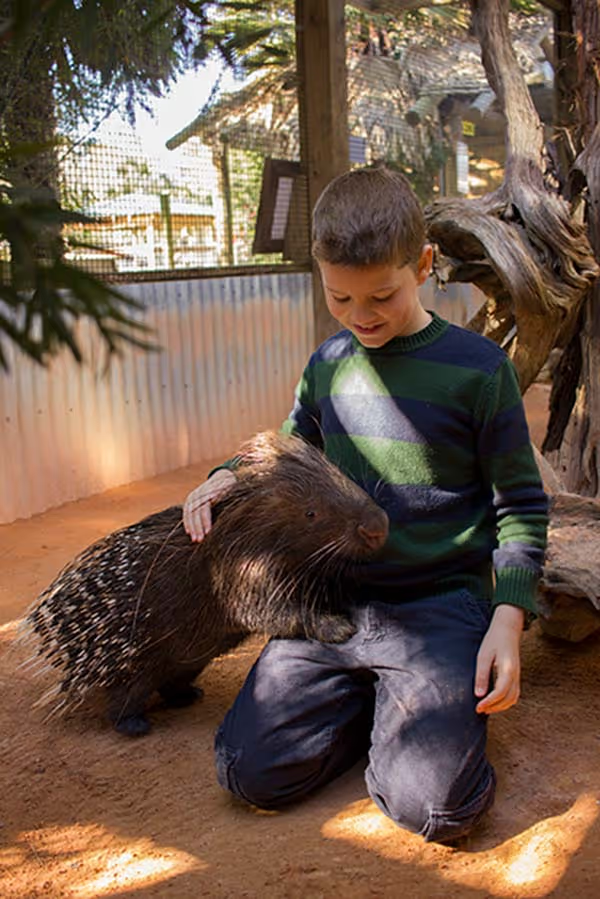
While Wild Florida doesn’t currently have a direct conservation program tied to porcupines, our ongoing mission to support wildlife education and respect for misunderstood species helps raise awareness and protect animals like these across the globe. Plus you can visit our very own African-Crested Porcupine, Stella, at our Porcupine Encounter!
From their towering legs to their six-foot-long necks, reticulated giraffes are built for browsing treetops and seeing across the savanna.
Let’s break down their size:
- Male height: Up to 18 feet
- Female height: 14 to 16 feet
- Weight: Between 1,500 and 4,200 pounds, depending on sex
- Neck length: About 6 feet
- Tongue length: Up to 18 to 20 inches
To picture their size, imagine standing next to a two-story building. That's about how tall a full-grown male giraffe can be!
At birth, giraffe calves are already about 6 feet tall and weigh between 100 and 150 pounds. Most giraffes reach their full height by age four or five, though their strength and body mass continue to grow into adulthood.
In the wild, giraffes live around 20 to 25 years on average. In protected care, some reach 30 or more with consistent veterinary support and nutrition.
Behaviors, Predators & Conservation
Reticulated giraffes live in groups called towers, often made up of females and calves. Males may travel solo or form small bachelor herds. During the day, giraffes spend their time browsing trees, resting in the shade or slowly walking across the savanna.
Males sometimes engage in necking, swinging their necks against each other to show strength and establish dominance. Their powerful kicks can also stop predators in their tracks. Even lions think twice before picking a fight with these giants.
Their main threats in the wild include:
- Lions
- Crocodiles
- Hyenas
- Poaching and habitat loss
Today, reticulated giraffes are considered endangered. Habitat loss and illegal hunting have caused their numbers to drop, but conservation efforts across Kenya and East Africa are making a difference.
At Wild Florida, guests can join our Giraffe Painting Experience with Leroy, our resident reticulated giraffe. Each booking helps support the Giraffe Conservation Foundation and its work to protect giraffes in the wild!
Size, Weight & Lifespan
These powerful reptiles grow fast and grow big, especially compared to most freshwater animals. Their size varies by sex, with males growing significantly larger than females:
Female length: About 8 feet
Male length: About 11 feet
Weight: Up to 1,000 pounds
Lifespan in the wild: up to 50 years
In professional care, alligators can live even longer; some have been known to live 60 years or more!
Behaviors, Predators & Conservation
American alligators are mostly solitary but become much more vocal during the spring mating season. Males bellow loudly to attract females and warn off rivals, often causing ripples in the water around them.
After hatching, baby alligators stay close to their mother for up to two years in small groups called pods. If you're lucky, you might even hear their high-pitched chirps during an airboat ride!
While adult alligators have few natural predators beyond humans, hatchlings are vulnerable to birds, raccoons, snakes, large fish and even other alligators. A mother’s protection during those early years is key to their survival.
By the 1960s, American alligators were nearly extinct due to overhunting and habitat loss. They were listed as endangered in 1967, but made a full comeback and were removed from the list in 1987. Today, they’re considered one of the greatest wildlife recovery stories in the U.S.
Size, Weight & Lifespan
Body length: About 18 inches
Tail length: Around 22 inches (longer than their body!)
Weight: 5 to 7.5 pounds, about the size of a house cat
Lifespan: Up to 18 years in the wild
In professional care, ring-tailed lemurs receive regular vet checkups, balanced nutrition and enrichment that can extend their lifespan to twenty to thirty years.
Behaviors, Predators & Conservation
Ring-tailed lemurs are highly social animals that live in groups called troops. Troops range from six to thirty members and are led by a dominant female, who stays in charge throughout her life.
These chatty primates are always in communication, using over 15 different vocal calls, scent marks and tail signals to keep the group together. During mating season, males compete using "stink fights." They rub scent from wrist glands onto their tails and wave them at rivals to show dominance.
In Madagascar, predators like the harrier-hawk, buzzard and ground boas are a threat. But the biggest danger comes from the fossa, a fast, cat-like carnivore that’s known for hunting lemurs.
But the biggest challenge ring-tailed lemurs face isn’t from predators. It’s from people. Deforestation and habitat loss are shrinking their wild spaces fast. That’s why conservation work, protected habitats and wildlife education are so important to their survival.
Size, Weight & Lifespan
Though tiny, these otters pack a lot of personality! Here's a closer look at their size, weight and lifespan:
Height: 18–24 inches
Length: 16–24 inches from head to tail
Weight: 6.6–11 pounds (average around 8 pounds)
Lifespan: 8–10 years in the wild, up to 20 years in human care
In the wild, their shorter lifespan is due to natural predators and environmental threats. In professional wildlife facilities, consistent nutrition, veterinary care and a safe habitat can double their years!
Behaviors & Predators
Asian small-clawed otters are highly social, often living in close-knit family groups of up to 12 members.
They “chat” constantly through squeaks, whistles, chirps, and scent markings. These signals help them coordinate hunting, play, and defend their territory.
While it may look like they are just having fun, much of their play is actually practice for hunting skills and building social bonds. Despite their playful personalities, they face threats in the wild from both predators and people.
Natural predators include:
- Large birds of prey
- Crocodiles
- Large snakes
- Monitor lizards
Human-related dangers such as habitat destruction, water pollution and illegal hunting also put their survival at risk.
To stay safe, they rely on teamwork, with family members taking turns keeping watch and sounding alarms when danger approaches. When needed, they can vanish in seconds by diving into the water or slipping into dense vegetation.
Size, Weight & Lifespan
When we say big, we mean it! Capybaras can weigh as much as a large dog or more. Here’s how they measure up:
Height: Up to 2 feet tall at the shoulders
Length: Up to 4 feet from nose to rear
Weight: Typically 77–150 pounds (average around 108 pounds)
Lifespan: 8–10 years in the wild and up to 12 years with expert care
A capybara’s size helps protect them in the wild, but also makes them highly visible. This is why these South American rodents rely on camouflage and group behavior for safety.
Behaviors & Predators
Capybaras are known for their social behavior, often living in groups of 10 to 20 individuals. During the dry season, herds can grow even larger. Some have been recorded to be as big as 100 capybaras!
Despite their gentle nature, wild capybaras must remain alert to predators. Capybara predators include:
- Jaguars and pumas
- Caimans and large snakes like anacondas
- Birds of prey that may target young capybaras
Capybaras are currently listed as a species of Least Concern, which means their population is stable for now. But threats like deforestation, habitat loss and hunting are putting pressure on them in some regions.
Frequently asked questions
Not known for their climbing skills, African-crested porcupines live on the ground and have long, hollow quills they use to rattle and defend. American porcupines, meanwhile, are smaller, with barbed quills and strong tree-climbing skills. Two continents, two totally different lifestyles, same prickly attitude.
An African-crested porcupine can have over 30,000 quills covering its body! These quills vary in length and thickness, some reaching up to 13 inches, and act as a built-in security system when danger’s near. One shake, and predators think twice.
Trick question, they can’t! That’s one of the biggest porcupine myths out there. Instead of launching quills, African-crested porcupines shake them to make a rattling sound and back into threats. Touch them, though, and those barbed quills detach like nature’s splinters.
Porcupines, especially African-crested ones, are best admired, not adopted. They’re large, nocturnal, strong-willed, and equipped with serious quills. While they can be affectionate in human care, they require expert handling, outdoor space, and specialized diets. In short: better suited for the wild (or wildlife parks like ours!).
ADOPT ME!
Adopt a porcupine for yourself and get a porcupine plush, certificate and fun facts while supporting real conservation efforts!
$25 Bronze Adoption
- Certificate of Adoption
$50 Silver Adoption
- Certificate of Adoption
- Photo of your adopted animal and fact sheet
- A plushy of your adopted animal
$85 Gold Adoption
- Certificate of Adoption
- Photo of your adopted animal and fact sheet
- A plushy of your adopted animal
- Keychain
- 1 encounter with the adopted animal
Featured experiences

Half-Day Adventure Package
For all ages
Experience a one-hour airboat tour to observe rich wildlife and enjoy access to our Alligator Park with the half-day adventure package.
You will receive:
- Digital souvenir download of your family holding Fluffy, one of our alligators
- Delicious basket lunch from the Chomp House Grill
- Bag of gator feed to feed our monster gators
*Reservations are required.
Capybara Encounter
Ages 8+
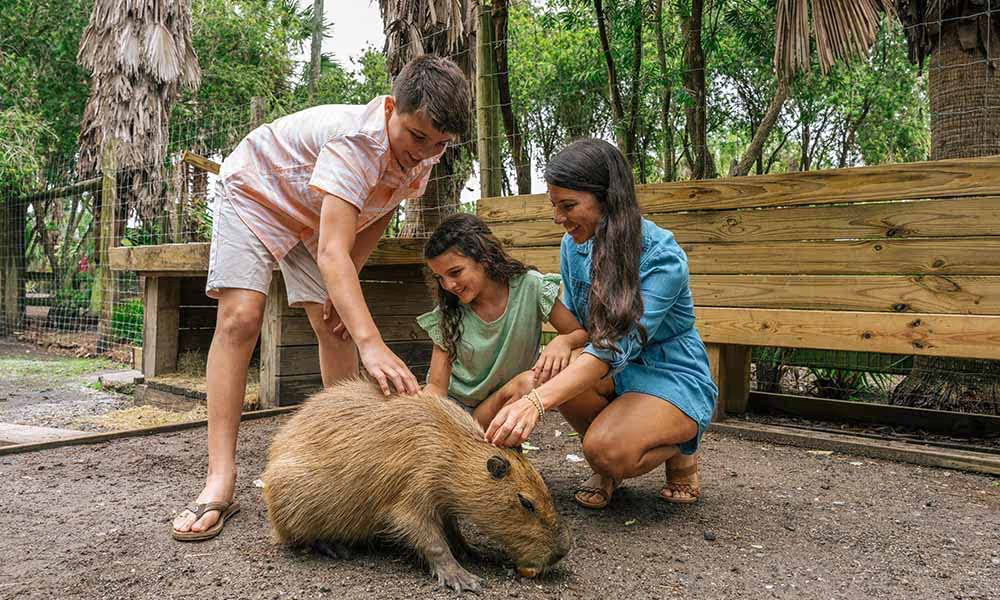
Come meet Wild Florida’s capybaras and experience their sweet, social nature for yourself! Plus, Wild Florida Adventure Park now offers capybara encounters at 4 PM. Don’t miss your chance to get up close with these lovable creatures!
Here’s what your encounter includes:
- Hand-Feed the Capys – Offer them some of their favorite snacks and watch as they gently nibble right from your hand.
- Up-Close Interaction – Spend time petting and bonding with these gentle, easygoing creatures.
- Listen to Their "Chatty" Conversations – Our capybaras are very vocal, so keep an ear out for their adorable whistles and squeaks!
Reservations are required. Capybara encounters are limited to only eight guests per encounter time. Please arrive on time. Your booking will be rescheduled for another date if you are late.
*All programs involving live animals are subject to change due to weather, availability, or unforeseen circumstances. Thank you for understanding.
*The Capybara Encounter includes Alligator Park Admission at Wild Florida.
Sloth Encounter
Ages 8+
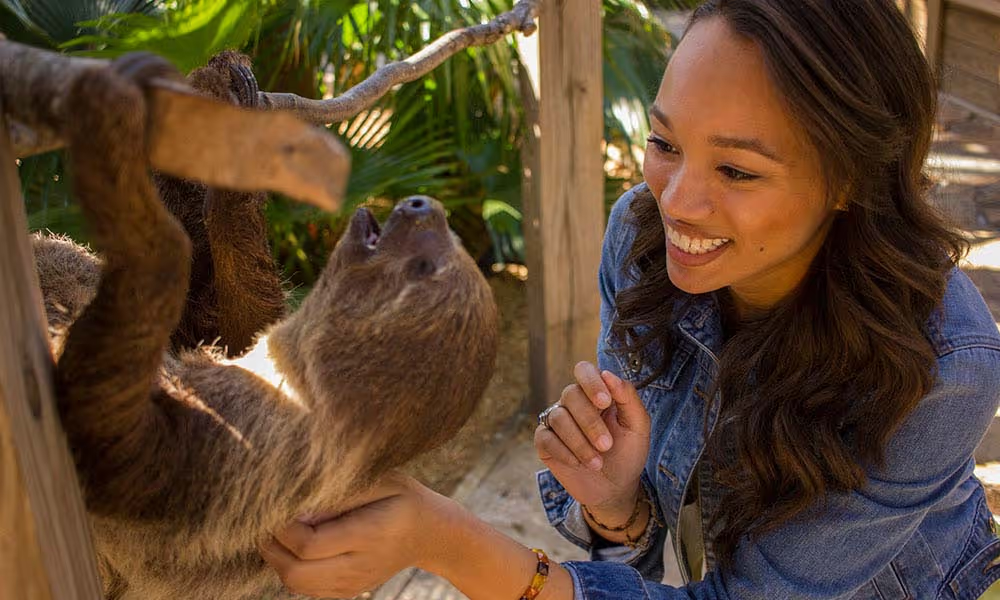
Calling all sloth lovers! If you’ve ever wanted to snap the perfect slothie, feel the soft fur of a real sloth, this is your chance!
Step inside our South America exhibit for an unforgettable up-close encounter with our two-toed sloths.
Reservations are required. Please arrive on time. Your booking will be rescheduled for another date if you are late. Sloth encounters are limited to only 10 guests per encounter time.
*All programs involving live animals are subject to change due to weather, availability, or unforeseen circumstances. Thank you for understanding.
*The Sloth Encounter includes Alligator Park Admission at Wild Florida.